Le blog de Olivier Crête
You are in the archive of Le blog de Olivier Crête for 2011.
Categories
Archives
| M | T | W | T | F | S | S |
|---|---|---|---|---|---|---|
| 1 | 2 | 3 | 4 | 5 | ||
| 6 | 7 | 8 | 9 | 10 | 11 | 12 |
| 13 | 14 | 15 | 16 | 17 | 18 | 19 |
| 20 | 21 | 22 | 23 | 24 | 25 | 26 |
| 27 | 28 | 29 | 30 | |||

Log in
Due to unintentional behavior breakage in the newest versions of GUPnP and GSSDP, the UPnP NAT traversal in all VoIP applications that use Farsight2 is currently broken. This includes Empathy, Pidgin, aMSN, etc. I advise distributors to just stay with the older GUPnP 0.16 (and GSSDP 0.10) releases until this is sorted out. For those who care, the details are on bugzilla.
Update: I’ve released GUPnP-IGD 0.2.1 that works around these problems.
Just like everyone else on Planet GNOME,

You are all cordially invited to my talk: Improving the quality of video calls on the Free Desktop. I will try to explain why Skype’s video calls look so much better than ours and what I’ve been doing to fix it, and how there is much more to do.
Now that WebRTC and RTCWeb are coming, it is more critical than ever that we can have good quality video calls in the GNOME platform so we can stay relevant.
I’d also like to thank my employer, Collabora, for once again sponsoring my trip. And don’t forget the Collabora party on Tuesday night!
On July 9, 2000, my first patch to a Free Software project was accepted. It was a patch to fix a small bug in GnomeICU, which was then the best ICQ client for GNOME. From there, I contributed a few more patches, then a lot more, then I re-wrote the protocol backend (to use the newer protocol) and before you knew it, I was the co-maintainer. The original author left, another maintainer joined, then left, and, in 2004, I was left as the only active maintainer. Then I lost interest and became the unmaintainer. I haven’t made a release since 2007, or written any code to justify one, so with GNOME 3 coming up, and after many years of non-maintenance, I have to admit the truth, GnomeICU, as a project, has died many years ago.
There were some changes left in the git tree, along with many translation updates, so I made a last release, for anyone who cares. To my surprise, we still get between 50 and 150 downloads per month from Sourceforge, hopefully it will be useful to some.
It was a fun project, I spent countless nights having fun programming, and I hope other did too. I learned a lot about programming, communities, etc. But more importantly, I’ve met some amazing people like Vincent Untz (rumor is that I committed his first patch to a GNOME project), Seb Bacher and even Philippe Kalaf.
After months of envy, I decided that since GNOME 3 is to be released in almost two weeks, it was time to try it out. I must say that is is pretty damn cool. Yes, it has a few annoying bugs and glitches, but nothing out of the ordinary for a first release. It is definitely going in the right direction.
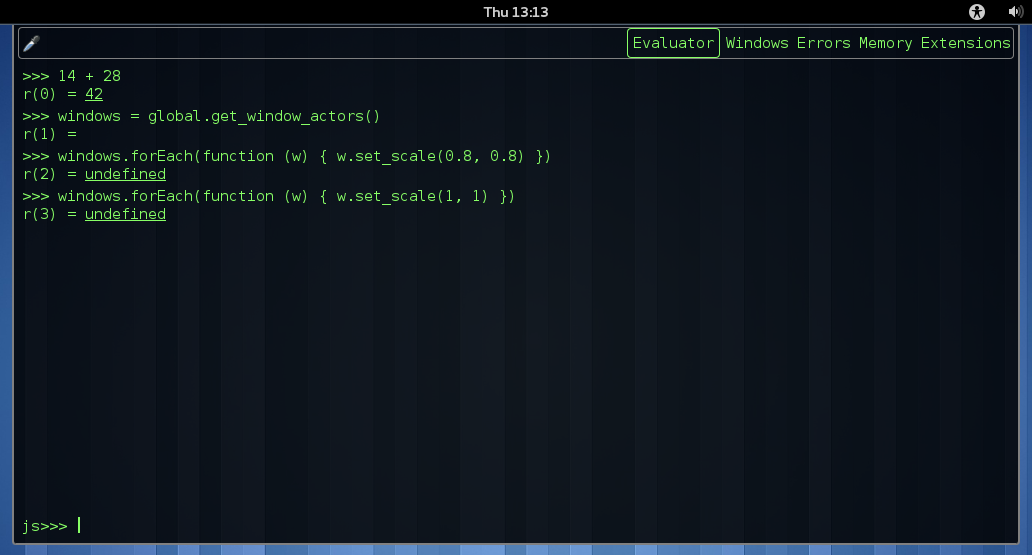
That said, we’re in 2011, and it’s still impossible to use OpenGL on two monitors without tearing. How incredible is that! The thing is, my second monitor is a 50″ Plasma TV and I really hate tearing there when I watch a movie. So when I have two monitors, I want the VSync to be on the second monitor. Luckily NVidia (yea sorry) has an environment variable to select which monitor an OpenGL application syncs on, the annoying thing is that this has to be set before the application is started. So after a little messing around with Looking Glass (which is pretty amazing), I was able to set the variable into the shell and have it re-exec itself. After getting that to work, I couldn’t resist writing an extension to do it for me. Be warned that if you switch screens at runtime, you also want to apply the patch from bug #645408 for now.
Update: I’ve been informed by our very own Daniel Stone that free drivers are better and can actually do the VSync correctly.